
Section · UPSC CSE Mains · Paper I
GS Paper 1
UPSC Mains GS Paper 1: Indian heritage and culture, history, geography and Indian society, explained for answer writing with the facts, maps and examples that lift scores.
179 articles in this section
179 articles in this section
The official syllabus, topic by topic
Indian Heritage and Culture, History and Geography of the World and Society. Every topic below appears in the order UPSC lists it — the chips under each one are our published notes on it.
1414 areas covered
Ancient Indian history
From the Stone Age to the early medieval transition — the Harappans, the Vedic age, Mauryas, Guptas and their world. The bedrock of Prelims, and the facts behind strong GS-1 answers.
Long before history: the million years India spent in the Stone AgeThe cities that planned their drains 4,000 years before modern plumbingThe traders who sold cotton to Mesopotamia, and the mystery of their disappearanceCow-wealth, war-horses and a thousand hymns: inside the Rig Vedic worldWhen kings turned divine: the Later Vedic makeover of Indian societyWhy Magadha ate its rivals: the rise of India's first superpowerFour truths and an eight-lane road out of suffering: the Buddha's teachingFrom emperor's mission to empty monasteries: Buddhism's 1,700-year Indian journeyThe religion that sweeps the ground before walking: understanding JainismThe empire that ran on spies, ledgers and war elephants: the Mauryan machineThe Emperor Who Weaponised Morality: Ashoka's Dhamma and His Talking RocksThe Greeks, Scythians and Nomads Who Became Indian: Post-Mauryan KingdomsThe Deccan's Bridge Builders: The SatavahanasPoets, Pearls and Pepper: The Sangam AgeThe Dynasty That Gave India Its Classical Age: The Gupta Empire'Golden Age'? The Great Gupta DebateThe Last Emperor of Ancient North India: HarshavardhanaCarving a Civilisation Out of Rock: The PallavasDeccan's Duel: Chalukyas and RashtrakutasThe Tigers Who Ruled the Ocean: The Imperial CholasMedieval Indian history
Sultanates, Vijayanagara, the Mughals and the Marathas — states, society and culture from the 8th to the 18th century.
Three Kings, One Throne: The 200-Year War That Shaped Medieval IndiaThe Southern Powerhouses: Cheras, Hoysalas, Kakatiyas and the Yadavas of DevagiriThe Slave Kings: How Aibak, Iltutmish, Razia and Balban Built the Delhi SultanateThe Reformer and the Visionary: Alauddin's Markets and Tughlaq's ExperimentsHow the Sultanate Ran, and Built: Iqta, Bureaucracy, Arches and DomesCity of Victory: How Vijayanagara Became Medieval South India's Greatest EmpireThe Deccan's Other Empire: Bahmani Sultans, Warring Successors and the Road to TalikotaLove as Rebellion: How the Bhakti Saints Rewrote Indian ReligionThe Mystics Who Wore No Crown: Sufism's Conquest of Indian Hearts1526: How Babur's Cannons, Humayun's Exile and Akbar's Genius Built the Mughal EmpireAfter Akbar: How Jahangir, Shah Jahan and Aurangzeb Remade, Then Unmade, the Mughal EmpireThe Empire's Operating System: Mansabdars, Jagirs and the Revenue MachineSandstone to Marble: How Each Mughal Emperor Left His Mark in StoneThe Mountain Kingdom That Outlasted an Empire: Shivaji and the MarathasTen Gurus, One Faith: The Complete Story of SikhismIndian culture
Salient aspects of art forms, literature and architecture from ancient to modern times.
Towers That Lean Toward Heaven: Decoding the Nagara TemplePyramids of Stone: The Dravida Temple TraditionThe Mule of Indian Architecture: Vesara and the Regional Temple TraditionsThe Sacred Hemisphere: How to Read a StupaCarving Mountains into Temples: 1,500 Years of Cave ArchitectureThree Buddhas, Three Worlds: Gandhara, Mathura and AmaravatiBefore the brush became a camera: the 2,000-year story of Indian paintingEight bodies, one grammar: how to never confuse India's classical dances againThe great musical divorce: Hindustani vs Carnatic, and the folk stage that talked backCoins that outlived their kings: 2,500 years of Indian moneyCarved in stone: how inscriptions became India's most honest historiansA civilisation that wrote everything down: Vedas, epics, Sangam and the classicsWhat makes a language 'classical'? The 20-year battle for the labelZero, surgery and rust-proof iron: the science ancient India actually didIndia, as the foreigners saw it: from Megasthenes to Marco PoloWho guards the past? UNESCO lists, the ASI, and India's heritage frontlineEmpires in Stone: Colonial Architecture in IndiaFrom Wash to Canvas: The Story of Modern Indian ArtStrings, Shadows and Hands: India's Puppetry TraditionsThe Atlas of Indian History: Chandraketugarh, Inamgaon, Dwarasamudra and the Sites UPSC Keeps Asking AboutPuthukkuli to Madhubani: India's Craft Atlas, GI Tags and the Textile Towns UPSC TestsVitasta to Eripatti: The River Names, Tribal Languages and Land Terms UPSC Loves to TestThe Archive in Clay: Indian Pottery from Mehrgarh to JaipurSwords, staffs and sacred pits: India's martial arts, state by stateWhere India went to study: Takshashila, Nalanda and the ancient universitiesThe Ways of Seeing: India's Six Orthodox and Three Heterodox Schools of PhilosophyModern Indian history
Modern Indian history from about the middle of the eighteenth century until the present — significant events, personalities, issues.
First in, last out: how four European powers fought over India, and why only Britain wonHow a trading company bought an empire: Plassey, Buxar and the conquest of BengalThe two powers that almost stopped the British: Mysore's rockets and the Maratha confederacyFrom traders to rulers: how the Company built its government machine (1773-1857)1857: the year India rose, and the empire learned to rule differentlyWho owned India's land? The three revenue experiments that broke the peasantThe sponge and the Thames: how colonialism drained India's wealthThe Famines That Bracketed British Rule: 1770, 1876-78, 1943The men who ruled India: Governor-Generals and Viceroys, and the reforms prelims loves to matchA century of sparks: the civil uprisings before 1857The Freedom Struggle
Its various stages and important contributors and contributions from different parts of the country.
The Indian Renaissance: Reformers Who Rebuilt a Society Before a Nation1885: The Year India Got a National Platform - The Moderates' Long GameCurzon's Partition, Tilak's Thunder: How Bengal Broke the Moderate MouldSwadeshi 1905: Boycott, Bande Mataram, and India's First Mass ClassroomBombs in Bengal, Ghadar Across the Seas: The First Revolutionary Wave1916: the Home Rule Leagues and the year nationalism went year-roundFrom Pietermaritzburg to Champaran: Gandhi's Satyagraha LaboratoryThe Movement That Made India Believe It Could Win, Then Gandhi Stopped It240 Miles to the Sea: How Salt Broke an Empire's LawThree Conferences, One Fast, and the Pact That Invented ReservationThe Other Freedom Struggle: Bombs, Martyrs and the Socialist TurnThe Longest Law That Solved Nothing, and Built EverythingTwenty-Eight Months of Power: India's First Rehearsal for Self-RuleDo or Die: The Leaderless Revolt That Broke the Raj's Moral ClaimNetaji's Army: How the INA and the 1946 Naval Mutiny Shook the RajThe Last Gamble for a United India: Cabinet Mission to the Mountbatten PlanDrawing the Line: Why India Was Partitioned in 1947562 Thrones, One Flag: Patel and the Integration of Princely StatesFrom Company Rule to Freedom: The Constitutional Arc, 1773-1947Ink Against Empire: The Press Under British RuleThe Classroom Raj: Education Under British RuleThe Soil Rebels: Peasant Movements That Forced India to ListenWhen the Hills Rose: Tribal Revolts Against the RajThe Other Half of the Revolution: Women in the Freedom StruggleAgainst the Ancient Order: The Anti-Caste Movements That Rebuilt IndiaRed Flags in the Mills: Workers, Communists and SocialistsTwo Nations, One Tragedy: Communalism and the Road to PartitionNinety Years in One Page: The Complete Freedom Struggle TimelineThe Men Who Dug Up India's Past: Rea, Sewell, Burgess, Elliot and the Scholars of the RajSwaraj, Three Ways: Gandhi, Nehru and Bose on Freedom, the Economy and the StateMoney and Nationalism: The Capitalist Class in the Freedom StruggleThe Empire's Own Rebels: Foreigners in India's Freedom StrugglePost-independence consolidation
Post-independence consolidation and reorganization within the country.
The Long Walk Home: Partition's Refugees and the Remaking of IndiaWriting the World's Longest Constitution: Inside the Constituent Assembly, 1946-50Nehru's Blueprint: How a Newborn Republic Built Itself, 1947-64Twelve Plans, One Dream: India's Tryst with the Planned Economy, 1951-2017From Zamindars to HYV Seeds: Land Reforms and the Green RevolutionWhen a Man Starved to Death, India Redrew Its MapThree Wars, One Decade: 1962, 1965 and 1971The Third Way: How India Invented Non-AlignmentDurga to Dictator: Indira Gandhi and the EmergencyTotal Revolution and Its Unravelling: JP to Janata1991: The Year India Pawned Its Gold and Freed Its EconomyThe Coalition Years: How India Learned to Govern Without a MajorityRockets from a Church, Atoms from Trombay: India's Science StoryThe Quiet Revolution: How India Educated, Healed, and Empowered Itself77 Years on One Page: The Master Timeline of Independent IndiaNational Integration: Holding a Union of Many Nations TogetherThe Streets Speak: Social Movements in Post-Independence IndiaBeyond the Congress: Jana Sangh, Socialists, Liberals, Swatantra and the Communists Who Ran KeralaHistory of the world
Events from the 18th century such as the industrial revolution, world wars, redrawing of national boundaries, colonization and decolonization, and political philosophies like communism, capitalism and socialism — their forms and effect on society.
When Reason Met the Machine: The Enlightenment and the Industrial RevolutionTaxes, Tea, and a New Republic: The American RevolutionLiberty, Equality, Fraternity: The French Revolution That Refused to DieTwo Roads to a Nation: The Unification of Italy and GermanyCarving the World: Colonialism and the New ImperialismThe Great War: How Europe's Rivalries Lit the World on Fire1917: The Year Russia Rewrote the Rules of PowerBetween the Wars: When Democracy Faltered and the Economy CollapsedMussolini and Hitler: How Democracies Voted Themselves Away1939-1945: The War That Remade the WorldThe Cold War: The Half-Century the Superpowers Fought Without Firing at Each OtherDecolonization: How Empires Unraveled Across Asia and AfricaCapitalism, Socialism, Communism: The Three Ideas That Ran the Modern WorldLeague of Nations to United Nations: Why the First Peace Machine Failed and the Second SurvivedThe Master Timeline: All of World History from the Industrial Revolution to the Soviet Collapse1911 to 1949: How China Buried an Empire and Built a RevolutionAfter Empire: Neo-Colonialism and the Building of Europe, 1945 to BrexitIndian society
Salient features of Indian society; diversity of India.
What holds India together: the salient features and living diversity of Indian societyCaste in India: the birth-ascribed order that refuses to dieTribes of India: the first peoples caught between forest and developmentFamily and marriage in India: the joint household meets the modern coupleFaith, friction and the state: religion, communalism and Indian secularismOne Country, Many Homelands: Regionalism and the Language QuestionFrom Chipko to Hashtags: The New Grammar of Social MovementsThe Revision Compass: Continuity and Change Across Indian SocietyWomen, population, urbanization
Role of women and women’s organizations; population and associated issues; poverty and developmental issues; urbanization, their problems and remedies.
Half the Nation: The State of Women in Indian SocietyThe Demographic Crossroads: From Population Bomb to Dividend WindowThe Unfinished Promise: Urbanisation as India's Growth EngineWhose Womb, Whose Right? Surrogacy Law and Ethics in IndiaOne Point Four Billion People: India's Population Map and the Dividend WindowPeople on the Move: Migration Within and Beyond IndiaWhere India Lives: Settlements, Towns and the Urban SurgeGlobalization and society
Effects of globalization on Indian society.
Social empowerment
Social empowerment; communalism; regionalism and secularism.
Physical geography of the world
Salient features of the world’s physical geography.
Where on Earth? The Spinning Geometry Behind Days, Seasons and MapsBeneath Your Feet: Inside the Earth's Interior, Minerals and RocksThe Shape of the World: Mountains, Plateaus, Plains and DesertsThe Breathing Sky: Atmosphere, Heat, Pressure Belts and WindsWhy Cyclones Spin and Skies Open: Precipitation, Cyclones and the World's ClimatesThe World Ocean: Relief, Salt, Currents, Tides and IceEarth's Living Skin: World Soils and the Vegetation They GrowIndia in Six Pieces: The Physiographic Divisions, Passes and StraitsRivers Older Than Mountains: India's Complete Drainage MapBetween Two Rivers: The Doabs of IndiaThe Monsoon Engine: How India Gets Its RainsUnder Your Feet: India's Soils and the Crops They GrowGreen India: Forests, Mangroves and the Wildlife They ShelterMap-Work Mastery: Straits, Passes, Rivers and the Mnemonics That StickThe Geography Revision Masterclass: Diagrams, Mnemonics and What UPSC Actually RepeatsResources and industries
Distribution of key natural resources across the world, including South Asia and the Indian subcontinent; factors responsible for the location of primary, secondary and tertiary sector industries.
What Lies Beneath: India's Minerals and Energy MapWhy Industries Sit Where They Sit: Weber's Logic, Indian Steel and the Corridor MapThe Economic Map of the World: Farms, Trade Blocs and the Chokepoints That Rule TradeWhere the World Keeps Its Wealth: The Geography of Natural ResourcesMoving India: Roads, Rails, Waterways and the Corridor EconomyGeophysical phenomena
Earthquakes, tsunami, volcanic activity, cyclones; geographical features and their location; changes in critical geographical features and in flora and fauna, and the effects of such changes.
Where India Lives: Settlements, Towns and the Urban Surge
From dispersed Himalayan homesteads to Dharavi: how settlements are classified, when a village becomes a census town, and why India's cities sprawl, flood and strain.
Geography · 1 October 2026 · 17 min read
People on the Move: Migration Within and Beyond India
The 45 crore internal migrants of Census 2011, the four great streams, the Gulf corridor and the 100-billion-dollar remittance river: India's migration geography in one article.
Geography · 1 October 2026 · 16 min read
One Point Four Billion People: India's Population Map and the Dividend Window
Where India's 1.44 billion actually live, why the Ganga plain carries close to half of them, and how the demographic dividend window to 2055 can be used or lost.
Geography · 1 October 2026 · 18 min read
After Empire: Neo-Colonialism and the Building of Europe, 1945 to Brexit
Nkrumah warned that flags could change while control stayed outside. Europe answered the same post-war ruins by pooling sovereignty. Loans, the CFA franc, Paris to Maastricht, and Brexit, in one post-war order story.
World History · 1 October 2026 · 17 min read
1911 to 1949: How China Buried an Empire and Built a Revolution
China ended imperial rule in 1911, then spent four decades in warlordism, united fronts and civil war. How the communists moved from the cities to the countryside, survived the Long March, and proclaimed the People's Republic in 1949.
World History · 1 October 2026 · 21 min read
The Streets Speak: Social Movements in Post-Independence India
From anti-Hindi agitations to farm-law repeals, from Dalit Panthers to Pinjra Tod: how organised ordinary people, outside parties and Parliament, kept rewriting the republic.
Post-Independence India · 30 September 2026 · 24 min read
National Integration: Holding a Union of Many Nations Together
India drew its map by 1975 - but winning Kashmir, Punjab, the Northeast and the tribal heartland took accords, statehood and patience. How national integration actually happened, and where it is still being negotiated.
Post-Independence India · 30 September 2026 · 20 min read
The Ways of Seeing: India's Six Orthodox and Three Heterodox Schools of Philosophy
Darshana literally means a way of seeing. From Nyaya's logic and Samkhya's dualism to Patanjali's Yoga, Jaimini's Mimamsa, Vedanta's Brahman and the dissenters, Charvaka, Ajivika and Ajnana, the complete GS-1 map of India's classical philosophies.
History · 30 September 2026 · 14 min read
Where India went to study: Takshashila, Nalanda and the ancient universities
Residential campuses, entrance by debate, students from China to Central Asia: how Takshashila, Nalanda, Vikramashila and Valabhi made India the world's classroom.
History · 30 September 2026 · 8 min read
Swords, staffs and sacred pits: India's martial arts, state by state
Kalaripayattu or Gatka? Thang Ta or Silambam? India's martial arts, from Kerala's kalari to Manipur's sword-and-spear, mapped with origins, weapons and exam traps.
History · 30 September 2026 · 9 min read
The Archive in Clay: Indian Pottery from Mehrgarh to Jaipur
A broken rim can date a settlement. From Neolithic hand-made vessels to PGW, mirror-black NBPW, and Jaipur's blue glaze: the complete pottery sequence for UPSC.
History · 30 September 2026 · 10 min read
The Empire's Own Rebels: Foreigners in India's Freedom Struggle
Besant, Olcott, Horniman, Cama, Nivedita, Stokes, Andrews, Mirabehn: the foreigners who funded, reported, sheltered and suffered for India's freedom, and why their presence gave the movement international legitimacy.
History · 30 September 2026 · 11 min read
Money and Nationalism: The Capitalist Class in the Freedom Struggle
Mill owners who funded the Congress but feared the streets: FICCI 1927, the rupee and tariff grievances, constitutional methods, the Bombay Plan of 1944, and the permanent tension with labour and the left.
History · 30 September 2026 · 11 min read
Swaraj, Three Ways: Gandhi, Nehru and Bose on Freedom, the Economy and the State
The freedom struggle was a coalition of ideologies, not a monolith: Gandhi's moral swaraj, Nehru's industrial republic, Bose's armed liberation, Ambedkar's social justice, Savarkar's cultural nationalism. Master the comparisons UPSC asks, plus the Mains 2020 strands framework.
History · 30 September 2026 · 16 min read
The Men Who Dug Up India's Past: Rea, Sewell, Burgess, Elliot and the Scholars of the Raj
Colonial-era archaeologists and historians and their contributions: Alexander Rea at Adichanallur, Longhurst at Hampi, Sewell's Forgotten Empire, Burgess and the Indian Antiquary, Elliot's historians; plus Madanapalle and Tagore, and Bankimchandra's novels.
History · 30 September 2026 · 26 min read
Beyond the Congress: Jana Sangh, Socialists, Liberals, Swatantra and the Communists Who Ran Kerala
The parties outside the Congress umbrella: Bharatiya Jana Sangh (1951), the Socialist breakaway (1948), the Liberal Federation of Sapru, the Swatantra Party as 1967's largest opposition, Kerala's first Communist government (1957) and the 1969 bank nationalization.
History · 30 September 2026 · 26 min read
Vitasta to Eripatti: The River Names, Tribal Languages and Land Terms UPSC Loves to Test
Ancient river names and their modern equivalents, the tribal languages Halbi Ho and Kui, Chola land-grant terms like Eripatti, and the Banjaras: the term-definition pairs that recur in UPSC prelims, decoded in tables.
History · 30 September 2026 · 27 min read
Puthukkuli to Madhubani: India's Craft Atlas, GI Tags and the Textile Towns UPSC Tests
Toda Puthukkuli shawls, Sujni embroidery, Uppada Jamdani sarees, the GI tag system, the Chanderi-Kancheepuram textile question, Gatka and Madhubani painting: the craft-heritage pairings and art forms UPSC keeps testing, in one atlas.
History · 30 September 2026 · 28 min read
The Atlas of Indian History: Chandraketugarh, Inamgaon, Dwarasamudra and the Sites UPSC Keeps Asking About
An atlas-style tour of the archaeological sites, medieval states and pilgrimage geography that appear in UPSC papers: Chandraketugarh, Inamgaon, Bhilsa, Dwarasamudra, Bodhgaya, Khajuraho, Shirdi, Nashik, Champaka, Durgara, Kuluta and the hill ranges of India's pilgrim towns.
History · 30 September 2026 · 28 min read
Between Two Rivers: The Doabs of India
A doab is the land between two converging rivers. From Punjab's five doabs to the Ganga-Yamuna doab, here is the map, the mnemonics and the meaning.
Geography · 29 September 2026 · 11 min read
The Map Is Being Redrawn: How Earth's Critical Features Are Changing
The Aral Sea is nearly gone, glaciers are retreating and coastlines are moving. What the UPSC syllabus means by changes in critical geographical features, flora and fauna.
Geography · 29 September 2026 · 22 min read
Where the World Keeps Its Wealth: The Geography of Natural Resources
Why iron ore sits in Australia and oil in the Gulf: the geological lottery behind the world's mines, wells, forests and fisheries, and what it means for India.
Geography · 29 September 2026 · 25 min read
Whose Womb, Whose Right? Surrogacy Law and Ethics in India
India went from the world's surrogacy bazaar to an altruistic-only law. The Surrogacy and ART Acts of 2021, landmark judgments, ethics and global models explained.
Indian Society · 29 September 2026 · 27 min read
Strings, Shadows and Hands: India's Puppetry Traditions
Kathputli, Tholu Bommalata, Ravana Chhaya, Putul Nach, Pavakoothu: the four types of Indian puppetry, their regions, techniques and stories, for UPSC.
History · 29 September 2026 · 21 min read
From Wash to Canvas: The Story of Modern Indian Art
From Company painting and Ravi Varma's oleographs to the Bengal School's wash technique and the 1947 Progressives, the complete map of modern Indian art for UPSC.
Modern History · 29 September 2026 · 23 min read
Empires in Stone: Colonial Architecture in India
From Portuguese churches in Goa to Lutyens' Delhi, how five colonial powers rebuilt India's cities in stone, and what their buildings reveal about empire.
History · 29 September 2026 · 27 min read
Ten Gurus, One Faith: The Complete Story of Sikhism
From Guru Nanak's one God to the Khalsa's founding on Vaisakhi 1699 and Ranjit Singh's empire at Lahore, the complete story of Sikhism: ten Gurus, martyrdoms, and a faith forged in history.
History · 29 September 2026 · 35 min read
1916: the Home Rule Leagues and the year nationalism went year-round
Tilak's and Besant's Home Rule Leagues (1916) demanded self-government within the Empire, built India's first year-round political machine, and forced the Montagu Declaration.
Modern History · 28 September 2026 · 19 min read
A century of sparks: the civil uprisings before 1857
Paika, Pazhassi Raja, Velu Thampi, the Poligars, Kukas, Pagal Panthis and a dozen more: the civil uprisings that shook Company rule before 1857, with leaders, regions and causes.
Modern History · 28 September 2026 · 35 min read
The men who ruled India: Governor-Generals and Viceroys, and the reforms prelims loves to match
From Warren Hastings to Mountbatten: who ruled India, when, and which reform belongs to whom. The viceroy-reform match-list is prelims' favourite format; this article is its home.
Modern History · 28 September 2026 · 35 min read

The Geography Revision Masterclass: Diagrams, Mnemonics and What UPSC Actually Repeats
Your final geography sweep: the 12 diagrams you must be able to draw, a mnemonic bank, PYQ trend analysis from a decade of papers, and the classic traps to dodge.
Geography · 27 September 2026 · 24 min read
Map-Work Mastery: Straits, Passes, Rivers and the Mnemonics That Stick
Prelims geography is won on the map. Every high-yield strait, pass, river, peak and desert of India and the world, organised with location mnemonics and map-style MCQs.
Geography · 27 September 2026 · 38 min read
The Economic Map of the World: Farms, Trade Blocs and the Chokepoints That Rule Trade
From shifting cultivation to plantation belts, trade blocs to the Strait of Malacca - how the world's farms, factories and shipping lanes fit together, and where India plugs in.
Geography · 27 September 2026 · 33 min read

Why Industries Sit Where They Sit: Weber's Logic, Indian Steel and the Corridor Map
From Weber's least-cost triangle to the 4:2:1 recipe of Indian steel plants and the new industrial corridors, this is the complete industrial geography UPSC keeps testing.
Geography · 27 September 2026 · 44 min read

What Lies Beneath: India's Minerals and Energy Map
From Odisha's iron-ore valleys to Rajasthan's solar parks to Reasi's lithium: India's mineral map, mining sector, critical minerals and the full energy mix - coal to green hydrogen.
Geography · 27 September 2026 · 20 min read
Green India: Forests, Mangroves and the Wildlife They Shelter
From evergreen rainforests to thorn scrub to alpine moss, India stacks every vegetation type inside one border. Forest types, mangroves, ISFR 2023 data and the conservation framework.
Geography · 27 September 2026 · 23 min read

Under Your Feet: India's Soils and the Crops They Grow
Eight soil families, three cropping seasons and a map of rain decide what grows where in India. The complete UPSC guide to soils, cropping patterns and food security.
Geography · 27 September 2026 · 34 min read
The Monsoon Engine: How India Gets Its Rains
Four months of rain decide India's harvests, rivers and economy. Here is how the ITCZ, jet streams, El Nino and the Indian Ocean Dipole together switch the monsoon on, and off.
Geography · 27 September 2026 · 22 min read

Rivers Older Than Mountains: India's Complete Drainage Map
From antecedent gorges to the Sundarban delta, Himalayan and peninsular rivers, drainage patterns, lakes, waterfalls and watershed management. India's drainage, mapped for UPSC.
Geography · 27 September 2026 · 36 min read
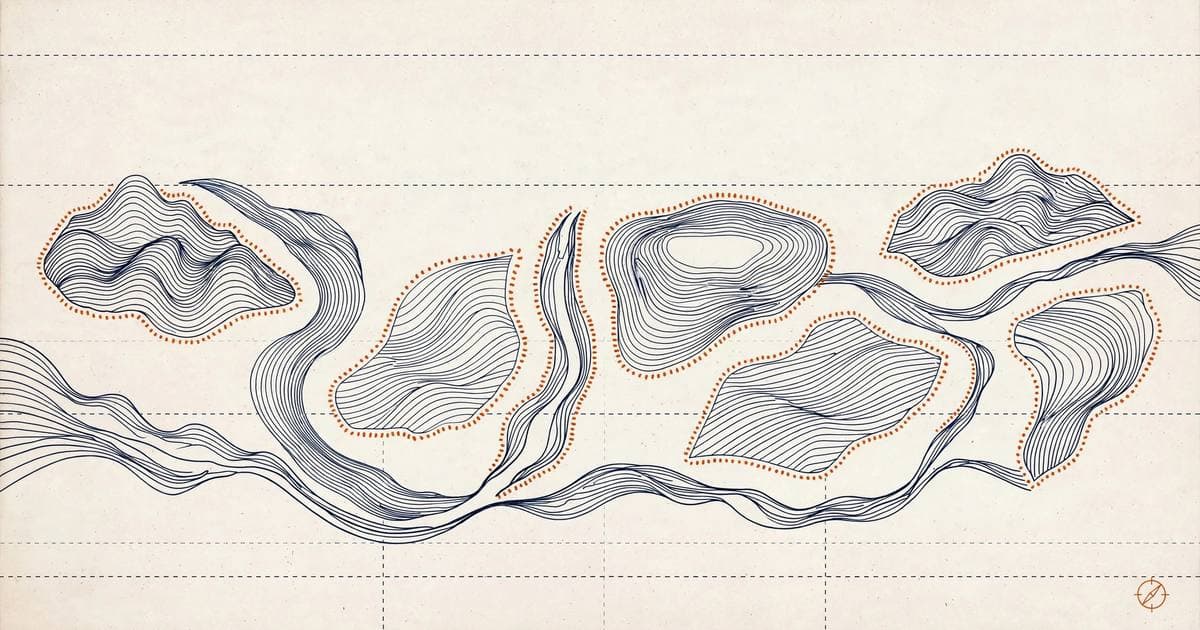
India in Six Pieces: The Physiographic Divisions, Passes and Straits
Six divisions, four Himalayan ranges, the plains that feed a billion, and the passes and straits that shaped strategy, India's complete physical map, built for UPSC map and theory questions.
Geography · 27 September 2026 · 25 min read
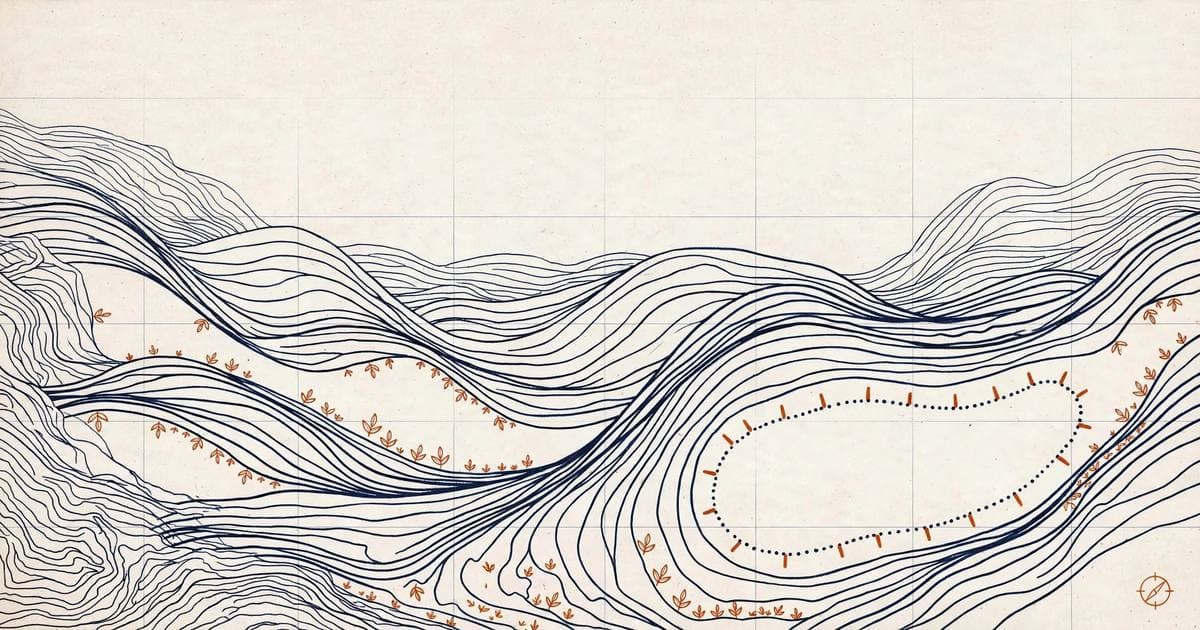
Earth's Living Skin: World Soils and the Vegetation They Grow
Why the world's blackest soils lie under grasslands, why deserts grow salty earth, and how vegetation maps climate from equator to tundra. World soils and biomes for UPSC Geography.
Geography · 27 September 2026 · 16 min read

The World Ocean: Relief, Salt, Currents, Tides and Ice
The ocean is Earth's biggest climate machine: its floor, its salt, its currents, its tides and its ice. A complete tour of oceanography - from the Mariana Trench to the Grand Banks fisheries - for UPSC Geography.
Geography · 27 September 2026 · 33 min read

Why Cyclones Spin and Skies Open: Precipitation, Cyclones and the World's Climates
From the afternoon thundershowers of the equator to the eye of a Bay of Bengal cyclone - how rain is made, why storms spin, and how Köppen mapped every climate on Earth. UPSC Geography, demystified.
Geography · 27 September 2026 · 23 min read

The Breathing Sky: Atmosphere, Heat, Pressure Belts and Winds
A thin film of gas decides where deserts bloom and monsoons march. Atmosphere structure, the heat budget, seven pressure belts and the great wind systems - with the local winds prelims loves.
Geography · 27 September 2026 · 27 min read
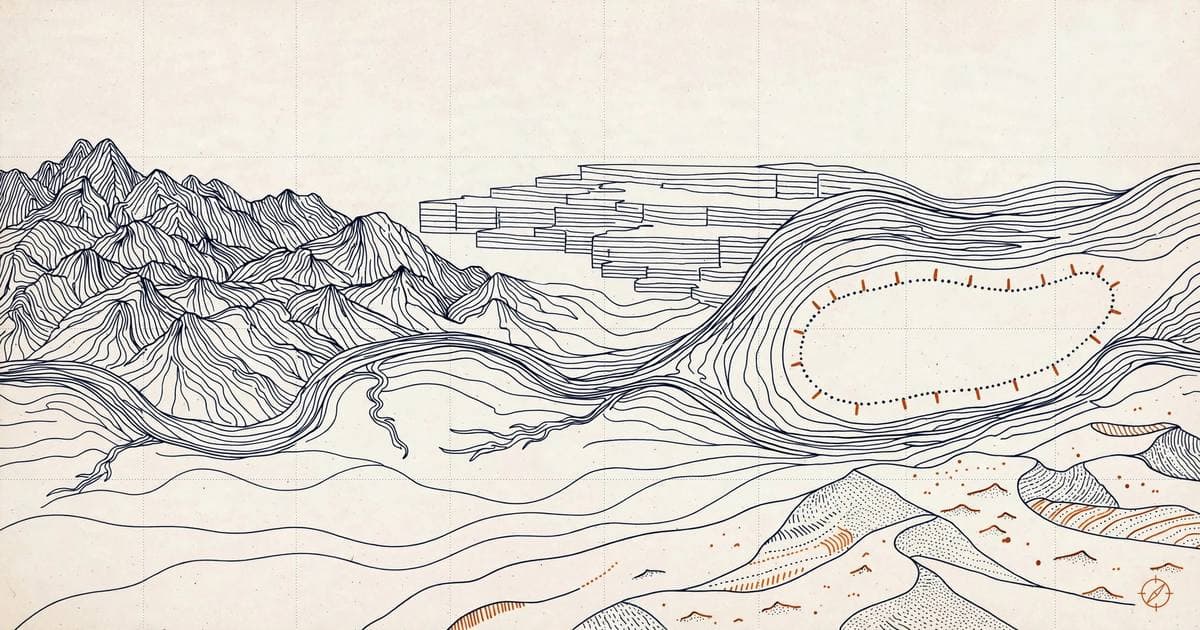
The Shape of the World: Mountains, Plateaus, Plains and Deserts
Mountains, plateaus, plains and deserts are the planet's autobiography in landform. Each family has a birth story, a global address and an economic personality, and UPSC keeps asking about all three.
Geography · 27 September 2026 · 41 min read
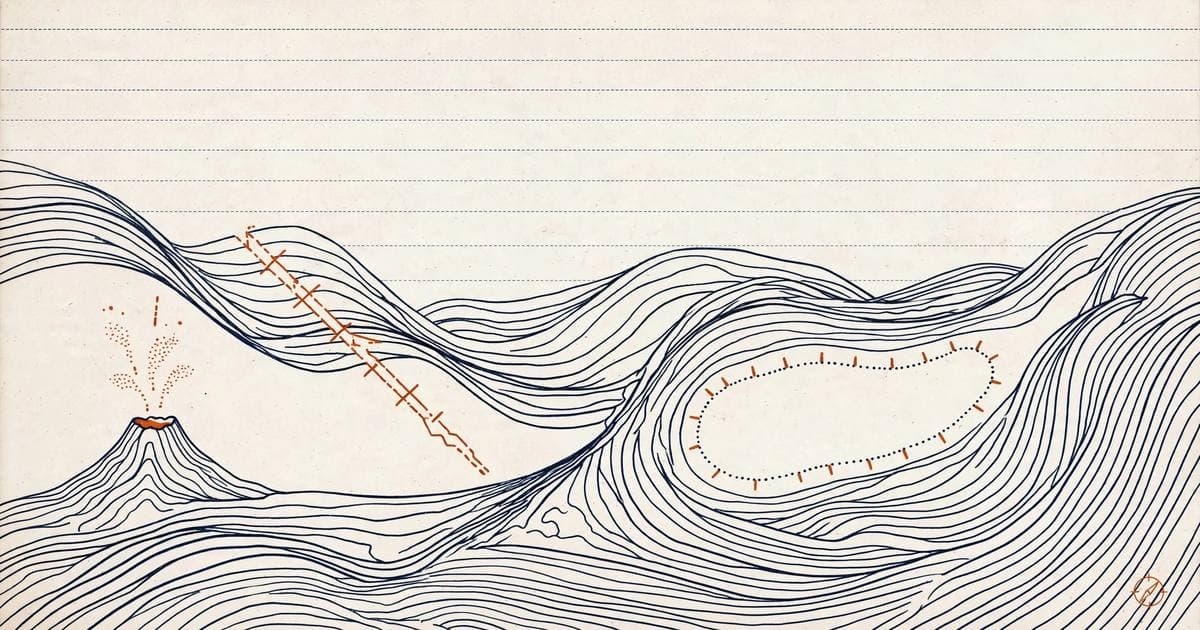
When the Earth Moves: Plate Tectonics, Earthquakes, Volcanoes and Tsunamis
Wegener's drifting continents became plate tectonics - the one theory behind earthquakes, volcanoes, mountains and tsunamis. The most mains-relevant chapter of physical geography, with exam-grade examples.
Geography · 27 September 2026 · 24 min read
Beneath Your Feet: Inside the Earth's Interior, Minerals and Rocks
No one has seen deeper than a few kilometres, yet we know the Earth's layered anatomy in detail. Seismic waves, the rock record and mineral chemistry reveal the interior - and UPSC tests all of it.
Geography · 27 September 2026 · 16 min read

Where on Earth? The Spinning Geometry Behind Days, Seasons and Maps
Everything in geography hangs on a tilted, spinning ball: latitudes, longitudes, time zones, day-night, and the rhythm of seasons. Master this geometry once, and half the syllabus starts answering itself.
Geography · 27 September 2026 · 28 min read
The Revision Compass: Continuity and Change Across Indian Society
The master revision for all of Indian society: seven phases from ancient anchors to the 2020s, a continuity-change matrix for every domain, and the pattern behind UPSC's favourite society questions.
Indian Society · 27 September 2026 · 27 min read
From Chipko to Hashtags: The New Grammar of Social Movements
From Chipko's tree-huggers to the Lokpal crowds to #MeToo India: how Indian social movements reinvented themselves after 1980, environmental, feminist, anti-corruption, and digital-age waves, with their critiques.
Indian Society · 27 September 2026 · 36 min read

One Country, Many Homelands: Regionalism and the Language Question
From the 1956 linguistic states gamble to sons-of-the-soil quotas and the North-South fiscal divide, why region remains India's most durable political identity, and how the language question still shapes federalism.
Indian Society · 27 September 2026 · 31 min read
Glocal India: How Globalisation Rewired Society Without Erasing It
Three decades after 1991: McAloo Tikki, Hinglish and 197 endangered languages. UPSC keeps asking whether globalisation threatens Indian pluralism, this article gives you the theories, the data, and the dialectical answer.
Indian Society · 27 September 2026 · 38 min read
The Invisible Majority: Who Really Counts as Vulnerable in India?
From 2.68 crore persons with disabilities to 150 million ageing Indians, UPSC's 2026 disability question proves vulnerable sections are now core syllabus. A data-driven map of who is vulnerable, why, and what the state owes them.
Indian Society · 27 September 2026 · 38 min read

Affirmative Action at 75: Reservations, Rights and the New Debates
Seven decades of quotas, two landmark judgments in two years, and one demand echoing across states: count us. India's affirmative-action architecture for SCs, STs and OBCs, and why its benefits still don't reach everyone.
Indian Society · 27 September 2026 · 29 min read

The Measurement Problem: Poverty, Deprivation and Development
Extreme poverty fell 27.1% to 5.3% by the World Bank's 2025 count, yet 57% of women are anaemic and human development lags growth. Why poverty persists in a rising India, in full GS-1 depth.
Indian Society · 27 September 2026 · 28 min read
The Unfinished Promise: Urbanisation as India's Growth Engine
Cities hold barely a third of India's people yet produce close to 70% of its GDP, engines governed as burdens. Urbanisation, from slums to smart cities, in full GS-1 depth.
Indian Society · 27 September 2026 · 23 min read
The Demographic Crossroads: From Population Bomb to Dividend Window
India is the world's most populous country, and its fertility has already slipped below replacement. The exam no longer asks how to control numbers, but how to convert a young workforce into prosperity before the dividend window closes.
Indian Society · 27 September 2026 · 24 min read
Half the Nation: The State of Women in Indian Society
India's women have never been more visible, in panchayats, courtrooms and combat units, yet the numbers still bite: only 41.7% work, 13.6% legislate, and nearly a third face spousal violence. The contemporary status of women, in GS-1 depth.
Indian Society · 27 September 2026 · 36 min read
Faith, friction and the state: religion, communalism and Indian secularism
Religion as social glue, communalism as political poison, and secularism as India’s indigenous answer, the GS-1 trinity, decoded with PYQs.
Indian Society · 27 September 2026 · 35 min read
Family and marriage in India: the joint household meets the modern couple
From the joint family life cycle to live-in relationships and same-sex marriage, how kinship, marriage and family are being rewritten in India.
Indian Society · 27 September 2026 · 42 min read
Tribes of India: the first peoples caught between forest and development
104 million Indians, 700+ groups, one constitutional shield, the story of tribal India, from PVTGs to the displacement-rehabilitation trap.
Indian Society · 27 September 2026 · 41 min read

Caste in India: the birth-ascribed order that refuses to die
Hierarchy by birth, purity and endogamy, how the caste system works, why it survives in cities and apps, and what the data says about its future.
Indian Society · 27 September 2026 · 31 min read

What holds India together: the salient features and living diversity of Indian society
India has survived every prediction of fracture, here is the civilisational grammar of continuity, pluralism and unity in diversity that UPSC keeps asking about.
Indian Society · 27 September 2026 · 33 min read

The Master Timeline: All of World History from the Industrial Revolution to the Soviet Collapse
One chronological sweep from the 1760s to 1991: revolutions, unifications, two world wars, the Cold War and the fall of empires, the highest-yield revision notes for GS-1.
World History · 27 September 2026 · 8 min read

League of Nations to United Nations: Why the First Peace Machine Failed and the Second Survived
Two world wars produced two peace machines. The League collapsed in twenty-six years; the UN turned eighty. What changed, and what still hasn't.
World History · 27 September 2026 · 12 min read
Capitalism, Socialism, Communism: The Three Ideas That Ran the Modern World
Three philosophies, one industrial revolution, and a century of revolution and rivalry. A crisp, UPSC-focused comparison of capitalism, socialism and communism.
World History · 27 September 2026 · 12 min read

Decolonization: How Empires Unraveled Across Asia and Africa
From Ghana's 1957 breakthrough to Algeria's brutal eight-year war and the Suez crisis that buried Britain's superpower pretensions, the forces, the process, and the wounds of empire's end.
World History · 27 September 2026 · 15 min read

The Cold War: The Half-Century the Superpowers Fought Without Firing at Each Other
From Yalta's map-drawing to the fall of the Berlin Wall, how the USA and USSR fought a global war of ideas, alliances and proxy battles without ever fighting each other directly.
World History · 27 September 2026 · 16 min read

1939-1945: The War That Remade the World
From Poland 1939 to Hiroshima 1945: the causes, the turning points, the home fronts, and how the deadliest war in history gave birth to the UN and the bipolar world.
World History · 27 September 2026 · 14 min read
Mussolini and Hitler: How Democracies Voted Themselves Away
Mussolini was handed power in 1922; Hitler was appointed Chancellor legally in 1933. How fascism and Nazism rose, what they believed, and why the world's democracies failed to stop them.
World History · 27 September 2026 · 12 min read
Between the Wars: When Democracy Faltered and the Economy Collapsed
The League of Nations failed, the world economy crashed in 1929, and dictators rose on the ruins. How the inter-war years mounted UPSC's famous 'serious challenge to the democratic state system'.
World History · 27 September 2026 · 12 min read

1917: The Year Russia Rewrote the Rules of Power
In eight months, Russia buried a 300-year monarchy and birthed the world's first socialist state. The causes, the two revolutions of 1917, and why the shockwaves reached all the way to India.
World History · 27 September 2026 · 15 min read

The Great War: How Europe's Rivalries Lit the World on Fire
In 1914 the world's richest continent walked into a slaughterhouse. How rival empires, tangled alliances and one assassination produced the Great War, and the punishing peace that followed.
World History · 27 September 2026 · 17 min read

Carving the World: Colonialism and the New Imperialism
In one generation, Africa went from 10% to nearly 100% under European rule. The causes, methods, and consequences of the New Imperialism, UPSC GS-1 notes on colonialism and empire.
World History · 27 September 2026 · 13 min read

Two Roads to a Nation: The Unification of Italy and Germany
Garibaldi sailed with a thousand volunteers; Bismarck calculated three wars. How 19th-century nationalism built Italy from below and Germany from above, the two unifications compared.
World History · 27 September 2026 · 11 min read

Liberty, Equality, Fraternity: The French Revolution That Refused to Die
The French Revolution invented the modern nation, popular sovereignty, and secularism, and exported them at bayonet point. Why 1789 still shapes democracy, human rights, and nationalism today.
World History · 27 September 2026 · 12 min read

Taxes, Tea, and a New Republic: The American Revolution
A tax on paper cost Britain an empire. How the American Revolution (1765-1783) turned a revolt against mercantilism into the world's first written constitution, and why the Civil War had to finish its work.
World History · 27 September 2026 · 12 min read
When Reason Met the Machine: The Enlightenment and the Industrial Revolution
How a revolution in ideas, reason, rights, and the courage to think, set the stage for the machine age that redrew the world's economy. UPSC GS-1 notes on the Enlightenment and the Industrial Revolution.
World History · 27 September 2026 · 16 min read

77 Years on One Page: The Master Timeline of Independent India
Every high-yield date from 1947 to 2024 on one page: independence, wars, Emergency, 1991 reforms, Pokhran-II, GST, Chandrayaan-3. The rapid-revision spine of the whole library.
Post-Independence India · 27 September 2026 · 59 min read

The Quiet Revolution: How India Educated, Healed, and Empowered Itself
From 18% literacy to near-universal enrolment, from epidemics to Ayushman Bharat, from welfare to rights: the social transformation of independent India - and what it left unfinished.
Post-Independence India · 27 September 2026 · 57 min read

Rockets from a Church, Atoms from Trombay: India's Science Story
From church-building rocket labs to the Moon's south pole: how independent India built a nuclear programme, a space agency, missiles and supercomputers under sanctions and scarcity.
Post-Independence India · 27 September 2026 · 43 min read
The Coalition Years: How India Learned to Govern Without a Majority
From 1989 to 2014, no party won a Lok Sabha majority. Mandal, Mandir and the Market reshaped politics as National Front, United Front, NDA and UPA governments rose and fell on coalition arithmetic.
Post-Independence India · 27 September 2026 · 58 min read
1991: The Year India Pawned Its Gold and Freed Its Economy
In 1991, India's forex reserves crashed to about $1 billion and gold was pledged abroad. Weeks later, Rao and Manmohan Singh launched the LPG reforms that ended the Licence Raj. This is the full story of the crisis and the cure.
Post-Independence India · 27 September 2026 · 28 min read

Total Revolution and Its Unravelling: JP to Janata
Total Revolution toppled a government, then the victors fell apart in 28 months. The JP movement, the Janata experiment, and why 1980 brought Indira Gandhi back.
Post-Independence India · 27 September 2026 · 26 min read
Durga to Dictator: Indira Gandhi and the Emergency
From Garibi Hatao to the Emergency: bank nationalisation, the 1971 triumph, the Allahabad verdict, 21 months of suspended democracy, and the 44th Amendment that made sure it couldn't repeat.
Post-Independence India · 27 September 2026 · 37 min read

The Third Way: How India Invented Non-Alignment
From Bandung 1955 to Belgrade 1961 to multi-alignment today: how non-alignment gave India a global voice, survived 1962 and 1971, and quietly became strategic autonomy.
Post-Independence India · 27 September 2026 · 24 min read

Three Wars, One Decade: 1962, 1965 and 1971
Three wars in one decade: 1962 shattered an illusion, 1965 redeemed an army, 1971 redrew the map of South Asia. Causes, course, outcomes and the lessons UPSC loves to ask.
Post-Independence India · 27 September 2026 · 48 min read
When a Man Starved to Death, India Redrew Its Map
A 58-day fast unto death redrew India's map. From the Dhar and JVP committees that said no, to the Fazl Ali Commission and the 1956 Act, how popular pressure carved India's linguistic states.
Post-Independence India · 27 September 2026 · 42 min read
From Zamindars to HYV Seeds: Land Reforms and the Green Revolution
From zamindars to HYV seeds: how land reforms broke feudalism on paper, why ceilings failed, what Vinoba Bhave's Bhoodan achieved, and how the Green Revolution ended hunger while poisoning the soil.
Post-Independence India · 27 September 2026 · 35 min read

Twelve Plans, One Dream: India's Tryst with the Planned Economy, 1951-2017
Twelve plans, sixty-six years: how India tried to industrialise through five-year timetables - the Mahalanobis bet, the 1966 collapse, the 1991 pivot, and the final plan before NITI Aayog.
Post-Independence India · 27 September 2026 · 44 min read
Nehru's Blueprint: How a Newborn Republic Built Itself, 1947-64
In 1947 experts expected India to collapse. By 1964 it was the world's largest democracy with steel plants, atomic research and a global voice. How the Nehru years built the Indian state - and what they got wrong.
Post-Independence India · 27 September 2026 · 48 min read

Writing the World's Longest Constitution: Inside the Constituent Assembly, 1946-50
The world's longest constitution was written between 1946 and 1950 by an assembly arguing over federalism, language, minority rights and property, while a civil war raged outside. Inside the debates that built the republic.
Post-Independence India · 27 September 2026 · 25 min read

The Long Walk Home: Partition's Refugees and the Remaking of India
At midnight on 15 August 1947 India woke to freedom, but for over seven million people, freedom arrived as a refugee column. This is the story of the camps, the colonies, and the laws that rebuilt their lives.
Post-Independence India · 27 September 2026 · 21 min read
Ninety Years in One Page: The Complete Freedom Struggle Timeline
1857 to 1947 in one sweep: the revolt, the splits, the three mass movements, the constitutional milestones, your last-night revision sheet for the whole freedom struggle.
Modern History · 27 September 2026 · 32 min read
Two Nations, One Tragedy: Communalism and the Road to Partition
From Dhaka 1906 to Lahore 1940 to Calcutta's blood in 1946, how religious identity became political currency, and how the two-nation theory ended in Partition.
Modern History · 27 September 2026 · 19 min read
Red Flags in the Mills: Workers, Communists and Socialists
AITUC, the Meerut trial, the Tashkent communists and the Congress Socialists, the left flank that made the freedom struggle about bread as well as flags.
Modern History · 27 September 2026 · 22 min read

Against the Ancient Order: The Anti-Caste Movements That Rebuilt India
Phule called caste slavery in 1873; Ambedkar burned the Manusmriti in 1927. The anti-caste movements wrote the first draft of the equality India promised itself in 1950.
Modern History · 27 September 2026 · 23 min read

The Other Half of the Revolution: Women in the Freedom Struggle
From Lakshmibai's cavalry charge to Usha Mehta's underground radio - the women who carried half the freedom struggle and got a paragraph in most textbooks.
Modern History · 27 September 2026 · 24 min read
When the Hills Rose: Tribal Revolts Against the Raj
Santhals, Mundas, Khasis, Nagas - tribal revolts fought for an entire way of life the British tried to tax into submission. Know the mainland-frontier split cold.
Modern History · 27 September 2026 · 21 min read
The Soil Rebels: Peasant Movements That Forced India to Listen
From the indigo fields of Bengal to the armed villages of Telangana, peasant revolts fed the national movement its mass base, and its toughest questions about who freedom was really for.
Modern History · 27 September 2026 · 23 min read

The Classroom Raj: Education Under British Rule
Macaulay's Minute, Wood's Despatch, and a century of commissions: how colonial education built clerks, and accidentally built nationalists.
Modern History · 27 September 2026 · 34 min read
Ink Against Empire: The Press Under British Rule
From Hickey's Gazette to the Vernacular Press Act: how the nationalist press defied censorship and became a weapon of the freedom struggle.
Modern History · 27 September 2026 · 34 min read

From Company Rule to Freedom: The Constitutional Arc, 1773-1947
From the Regulating Act of 1773 to the Independence Act of 1947 - the full constitutional arc that taught India the grammar of modern government.
Modern History · 27 September 2026 · 34 min read

562 Thrones, One Flag: Patel and the Integration of Princely States
562 thrones, one flag: how Patel and V.P. Menon integrated the princely states, and why Junagadh, Hyderabad and Kashmir tested the plan.
Modern History · 27 September 2026 · 20 min read
Drawing the Line: Why India Was Partitioned in 1947
Why India was divided in 1947: the collapse of compromise, Mountbatten's 72-day timetable, the Independence Act, and the human cost.
Modern History · 27 September 2026 · 22 min read

The Last Gamble for a United India: Cabinet Mission to the Mountbatten Plan
The Cabinet Mission's three-tier plan was the last chance at a united India. Why it collapsed, and how Mountbatten's 3rd June Plan replaced it.
Modern History · 27 September 2026 · 22 min read
Netaji's Army: How the INA and the 1946 Naval Mutiny Shook the Raj
From Bose's daring escape to the Red Fort trials and the 1946 naval mutiny, how the INA turned Britain's own soldiers against the Raj.
Modern History · 27 September 2026 · 25 min read

Do or Die: The Leaderless Revolt That Broke the Raj's Moral Claim
"Do or Die", then every leader was in jail by dawn, and India fought on without them: parallel governments, an underground radio, and the repression that finally broke the Raj's moral claim to rule.
Modern History · 27 September 2026 · 24 min read

Twenty-Eight Months of Power: India's First Rehearsal for Self-Rule
In 1937 the Congress stopped demanding power and started using it, 28 months of ministries, tenancy laws and prohibition, ended by a war India never agreed to join. India's first rehearsal for self-rule.
Modern History · 27 September 2026 · 25 min read

The Longest Law That Solved Nothing, and Built Everything
321 sections, 10 schedules, zero sovereignty: the 1935 Act sketched a federation that never existed, and still donated half its machinery to the Indian Constitution.
Modern History · 27 September 2026 · 24 min read

The Other Freedom Struggle: Bombs, Martyrs and the Socialist Turn
They chose the pistol over the spinning wheel, and lost. But Bhagat Singh, Azad and Surya Sen rewired the meaning of freedom itself, forcing the Congress to think beyond merely replacing white rulers with brown ones.
Modern History · 27 September 2026 · 23 min read
Three Conferences, One Fast, and the Pact That Invented Reservation
Three conferences in London failed to write India's constitution - but they triggered a fast unto death in a Pune jail that still decides how India elects its Dalit representatives.
Modern History · 27 September 2026 · 26 min read

240 Miles to the Sea: How Salt Broke an Empire's Law
A 61-year-old man walked 240 miles to the sea to pick up a fistful of salt - and turned it into the most potent weapon the Raj had ever faced. How the Dandi March made civil disobedience a national language.
Modern History · 27 September 2026 · 25 min read

The Movement That Made India Believe It Could Win, Then Gandhi Stopped It
In August 1920, Gandhi asked a whole nation to stop cooperating with its rulers, and for the first time since 1857, India answered as one. Then a mob in a UP village burned 22 policemen alive, and Gandhi pulled the plug on his own movement.
Modern History · 27 September 2026 · 33 min read

From Pietermaritzburg to Champaran: Gandhi's Satyagraha Laboratory
Twenty-one years in South Africa invented satyagraha; three local experiments - Champaran, Ahmedabad, Kheda - turned Gandhi from a returned lawyer into the leader of India's masses.
Modern History · 27 September 2026 · 36 min read

Bombs in Bengal, Ghadar Across the Seas: The First Revolutionary Wave
From Bengal's secret societies to Sikh farmers in California plotting a mutiny, the first revolutionary wave tried by bomb and pistol what petitions could not do - and produced martyrs who outlived every viceroy.
Modern History · 27 September 2026 · 43 min read
Swadeshi 1905: Boycott, Bande Mataram, and India's First Mass Classroom
For three years Bengal tried to live without Britain, boycotting Manchester cloth, building Indian mills and national schools. The Swadeshi movement was India's first mass classroom, and its laboratory for everything Gandhi later used.
Modern History · 27 September 2026 · 28 min read

Curzon's Partition, Tilak's Thunder: How Bengal Broke the Moderate Mould
Curzon cut Bengal in two in 1905 to weaken nationalism - and radicalised a generation instead. Lal-Bal-Pal rose, the Congress split at Surat in 1907, and polite petitioning died.
Modern History · 27 September 2026 · 36 min read

1885: The Year India Got a National Platform - The Moderates' Long Game
In December 1885, seventy-two men in a Bombay hall spoke as Indians for the first time. The Moderates' prayers and petitions won little - yet built the entire foundation of the freedom movement.
Modern History · 27 September 2026 · 36 min read

The Indian Renaissance: Reformers Who Rebuilt a Society Before a Nation
Before India could imagine a nation, it had to reimagine its society. Raja Ram Mohan Roy, Dayanand, Vivekananda and Ranade rebuilt Indian self-confidence - and that confidence became nationalism.
Modern History · 27 September 2026 · 42 min read

The Famines That Bracketed British Rule: 1770, 1876-78, 1943
From the Great Bengal Famine of 1770 to the man-made catastrophe of 1943, British land revenue and export priorities turned every bad harvest into mass death, and the exam keeps asking why.
Modern History · 27 September 2026 · 20 min read
The sponge and the Thames: how colonialism drained India's wealth
Naoroji did the arithmetic of empire and named it: the drain of wealth. How British policy silenced India's looms, commercialized its fields, and turned railways into drainpipes.
Modern History · 27 September 2026 · 21 min read

Who owned India's land? The three revenue experiments that broke the peasant
Bengal's tax-collectors became landlords, Madras dealt directly with the peasant, the north taxed whole villages. Three revenue experiments, one verdict: the peasant paid for the empire.
Modern History · 27 September 2026 · 24 min read
1857: the year India rose, and the empire learned to rule differently
In 1857, sepoys, queens, peasants and preachers rose together, and lost. The uprising that ended Company rule, rebuilt the British army, and became Indian nationalism's first shared memory.
Modern History · 27 September 2026 · 37 min read

From traders to rulers: how the Company built its government machine (1773-1857)
Between 1773 and 1857 the Company stopped being a business and became a government, with Acts of Parliament, a steel-frame bureaucracy, Cornwallis's courts and the thana-daroga police. How the machine was built.
Modern History · 27 September 2026 · 28 min read

The two powers that almost stopped the British: Mysore's rockets and the Maratha confederacy
Mysore had war rockets and French-trained infantry; the Marathas had the subcontinent's last indigenous empire. Seven wars later, both were gone, and the Subsidiary Alliance did the rest quietly.
Modern History · 27 September 2026 · 39 min read
How a trading company bought an empire: Plassey, Buxar and the conquest of Bengal
A trading company bought India's richest province in three moves, a conspiracy at Plassey, a real battle at Buxar, and an emperor's signature at Allahabad. How Bengal fell, and why it mattered.
Modern History · 27 September 2026 · 22 min read
First in, last out: how four European powers fought over India, and why only Britain won
Four European powers fought for India's coasts, the Portuguese arrived first and left last, the Dutch chose trade over empire, the French nearly won. Why only Britain survived the race.
Modern History · 27 September 2026 · 23 min read
Who guards the past? UNESCO lists, the ASI, and India's heritage frontline
44 World Heritage sites, 16 living traditions, one 1,600-year-old iron pillar, and a constant fight against smugglers, floods and neglect. How India protects its heritage.
Art & Culture · 27 September 2026 · 31 min read

India, as the foreigners saw it: from Megasthenes to Marco Polo
Greek envoys, Chinese pilgrims, Arab scholars, outsiders wrote down the India that Indians didn't. Their accounts are among our richest historical sources.
Art & Culture · 27 September 2026 · 34 min read
Zero, surgery and rust-proof iron: the science ancient India actually did
Aryabhata measured the Earth, Sushruta rebuilt noses, and a 1,600-year-old pillar still refuses to rust. Separate the real achievements from the hype.
Art & Culture · 27 September 2026 · 29 min read

What makes a language 'classical'? The 20-year battle for the label
Six languages became eleven in 2024, and the criteria themselves were rewritten. Know the list, the years, and why the label matters beyond pride.
Art & Culture · 27 September 2026 · 23 min read

A civilisation that wrote everything down: Vedas, epics, Sangam and the classics
From Rigvedic hymns to Kalidasa's plays to Tamil Sangam poetry, the texts that built Indian thought, and the authors UPSC expects you to know by name.
Art & Culture · 27 September 2026 · 34 min read

Carved in stone: how inscriptions became India's most honest historians
Edicts, prashastis and donative records, inscriptions don't flatter the way court poets do. Learn the scripts, the landmark stones, and the decipherment story.
Art & Culture · 27 September 2026 · 22 min read

Coins that outlived their kings: 2,500 years of Indian money
Punch-marked silver, Gupta gold dinaras, Tughlaq's token currency, every coin is a time capsule. Decode the metals, the motifs, and the messages they carried.
Art & Culture · 27 September 2026 · 30 min read
The great musical divorce: Hindustani vs Carnatic, and the folk stage that talked back
Two classical music systems from one ancient root, plus the rowdy folk theatre that mocked priests and kings. Learn the split, the gharanas, and the regional stage forms.
Art & Culture · 27 September 2026 · 30 min read

Eight bodies, one grammar: how to never confuse India's classical dances again
Bharatanatyam or Kathakali? Odissi or Kuchipudi? The eight classical dances share one ancient grammar, learn the origins, the signature moves, and the classic exam traps.
Art & Culture · 27 September 2026 · 27 min read
Before the brush became a camera: the 2,000-year story of Indian painting
From the candle-lit caves of Ajanta to the mud walls of Mithila, Indian painting has always been storytelling in colour, and UPSC loves asking who painted what, where, and how.
Art & Culture · 27 September 2026 · 31 min read

Three Buddhas, Three Worlds: Gandhara, Mathura and Amaravati
One Buddha in a toga, one on a lion throne, one dancing in limestone, plus the Gupta synthesis at Sarnath. The three great schools of Indian sculpture compared.
Art & Culture · 27 September 2026 · 25 min read

Carving Mountains into Temples: 1,500 Years of Cave Architecture
From Ashoka's mirror-polished Ajivika caves to Ajanta's paintings, Ellora's top-down monolith and Elephanta's Trimurti. The complete rock-cut guide.
Art & Culture · 27 September 2026 · 24 min read
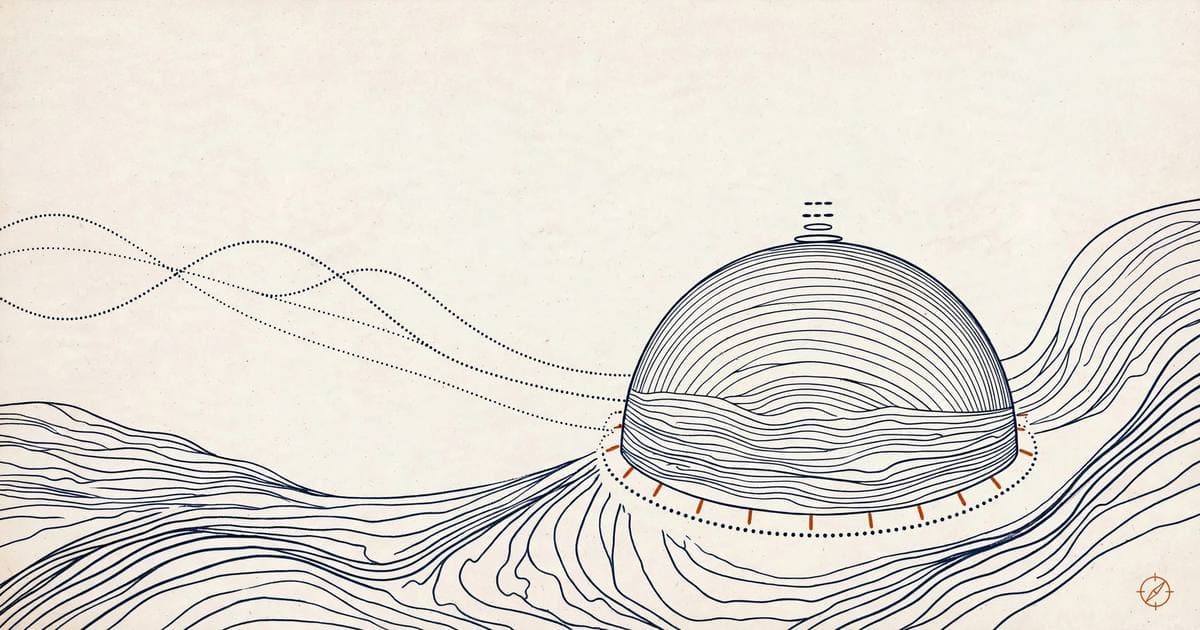
The Sacred Hemisphere: How to Read a Stupa
Dome as universe, spire as fire, umbrellas as the Buddha's teaching, plus Sanchi's three lives in one monument and Amaravati's limestone narratives. The stupa decoded.
Art & Culture · 27 September 2026 · 25 min read

The Mule of Indian Architecture: Vesara and the Regional Temple Traditions
The Deccan's hybrid temple style, from the Chalukya laboratories to the Hoysala baroque, plus Bengal's hut-roofed temples and the Himalayan pagodas. Vesara decoded.
Art & Culture · 27 September 2026 · 21 min read

Pyramids of Stone: The Dravida Temple Tradition
Vimana, gopuram, prakara: from the Pallava caves to Rajaraja's 66-metre Brihadeeswara and Srirangam's record-breaking gateway. The complete Dravida guide.
Art & Culture · 27 September 2026 · 23 min read

Towers That Lean Toward Heaven: Decoding the Nagara Temple
One curving tower, three subtypes, and a family of regional dialects, from Konark's stone chariot to Khajuraho's mountain of sculpture. The complete Nagara guide.
Art & Culture · 27 September 2026 · 27 min read

The Mountain Kingdom That Outlasted an Empire: Shivaji and the Marathas
Guerrilla warfare, 370 forts, the Ashtapradhan cabinet, chauth, and the 1761 disaster at Panipat. How Shivaji's mountain kingdom defied Aurangzeb and shaped modern India.
Medieval History · 27 September 2026 · 24 min read

Sandstone to Marble: How Each Mughal Emperor Left His Mark in Stone
From Babur's paradise gardens to the Taj Mahal and Aurangzeb's spare mosques, plus the painting ateliers that went from Akbar's epics to Jahangir's zebra. A reign-by-reign tour.
Medieval History · 27 September 2026 · 23 min read

The Empire's Operating System: Mansabdars, Jagirs and the Revenue Machine
One rank decided every officer's salary and cavalry strength; one revenue grid taxed every harvest. How the mansabdari and zabt systems let the Mughals run a subcontinent.
Medieval History · 27 September 2026 · 29 min read
After Akbar: How Jahangir, Shah Jahan and Aurangzeb Remade, Then Unmade, the Mughal Empire
Three emperors, one trajectory: Jahangir's art-filled court, Shah Jahan's marble dreams, and Aurangzeb's 25-year Deccan war that broke the empire he tried to complete.
Medieval History · 27 September 2026 · 43 min read

1526: How Babur's Cannons, Humayun's Exile and Akbar's Genius Built the Mughal Empire
A 12-year-old king of a tiny Central Asian valley lost everything, then conquered India with gunpowder and daring. His son lost the empire and won it back; his grandson Sher Shah rebuilt it in five years; and his great-grandson Akbar turned conquest into a civilisation. Mughal origins, explained.
Medieval History · 27 September 2026 · 47 min read

The Mystics Who Wore No Crown: Sufism's Conquest of Indian Hearts
They rejected palaces, embraced music, fed the poor, and preached that God is love, the Sufi saints of the Chishti and Suhrawardi orders did what no army could: they made Islam Indian. From Ajmer's dargah to Nizamuddin's khanqah, this is their story.
Medieval History · 27 September 2026 · 39 min read

Love as Rebellion: How the Bhakti Saints Rewrote Indian Religion
From Tamil poet-saints singing to Shiva in the 7th century to Kabir mocking both priest and mullah, Mirabai defying a kingdom for Krishna, and Chaitanya dancing through Bengal, the Bhakti movement was India's longest spiritual revolution, and UPSC never stops asking about it.
Medieval History · 27 September 2026 · 48 min read
The Deccan's Other Empire: Bahmani Sultans, Warring Successors and the Road to Talikota
While Vijayanagara rose on the Tungabhadra's south bank, a rival empire rose on the north: the Bahmani kingdom, born from a revolt against Delhi in 1347. Its story is one of Persian splendour, bloody faction fights, and five successor states that finally destroyed Vijayanagara at Talikota.
Medieval History · 27 September 2026 · 33 min read

City of Victory: How Vijayanagara Became Medieval South India's Greatest Empire
In 1336, two brothers founded a city on the Tungabhadra that would defy the Delhi Sultanate for 300 years. Under Krishnadevaraya it became the richest city in India, until one catastrophic battle in 1565 reduced it to the haunting ruins of Hampi.
Medieval History · 27 September 2026 · 38 min read

How the Sultanate Ran, and Built: Iqta, Bureaucracy, Arches and Domes
The Delhi Sultanate's real revolution wasn't on the battlefield, it was in the tax register and the mason's yard. The iqta system funded a professional state, and the true arch, the dome and lime mortar gave India a new architectural language. Here's how both worked.
Medieval History · 27 September 2026 · 38 min read

The Reformer and the Visionary: Alauddin's Markets and Tughlaq's Experiments
One Sultan fixed the price of everything from grain to horses to fund history's first standing army in India. His successor tried to move the capital 1,500 km, print token currency, and tax a famine-struck doab, and failed spectacularly at all three. The Khaljis and Tughlaqs, explained.
Medieval History · 27 September 2026 · 34 min read
The Slave Kings: How Aibak, Iltutmish, Razia and Balban Built the Delhi Sultanate
In 1206, a slave-general with no royal blood founded India's first Islamic empire from Delhi. Within sixty years, his successors, a consolidator, a queen who defied her nobles, and an iron-fisted king who called himself God's Shadow, had built a state that would rule for three centuries.
Medieval History · 27 September 2026 · 23 min read

The Southern Powerhouses: Cheras, Hoysalas, Kakatiyas and the Yadavas of Devagiri
While Delhi was still a Tomar town, the Deccan and the far south were ruled by dynasties UPSC loves to test: the Cheras who guarded the spice trade, the Hoysalas who carved soapstone into lace, the Kakatiyas ruled by a warrior queen, and the Yadavas whose capital became Tughlaq's dream.
Medieval History · 27 September 2026 · 34 min read

Three Kings, One Throne: The 200-Year War That Shaped Medieval India
When Harsha died without an heir in 647 CE, three ambitious powers, the Palas, the Pratiharas and the Rashtrakutas, fought for two centuries over a single city, Kannauj. This is the story of the Tripartite Struggle, the Arab invasions it helped contain, and the Rajput clans that rose from its
Medieval History · 27 September 2026 · 35 min read

The Tigers Who Ruled the Ocean: The Imperial Cholas
A fleet sacked Srivijaya in 1025 CE, villages elected their assemblies by lot, and bronzes danced: the imperial Cholas turned the Bay of Bengal into their lake.
Ancient History · 27 September 2026 · 34 min read
Deccan's Duel: Chalukyas and Rashtrakutas
Two dynasties, one Deccan: the Chalukyas who stopped Harsha and invented the Vesara style, and the Rashtrakutas who carved a mountain into the Kailasa temple.
Ancient History · 27 September 2026 · 37 min read

Carving a Civilisation Out of Rock: The Pallavas
Before the Pallavas, South Indian temples were built of perishable wood. From Kanchi, they invented Dravidian stone architecture in four deliberate stages.
Ancient History · 27 September 2026 · 28 min read
The Last Emperor of Ancient North India: Harshavardhana
He rescued his sister from a funeral pyre, united North India, wrote Sanskrit plays, and a Chinese pilgrim wrote it all down. The last great emperor of ancient North India.
Ancient History · 27 September 2026 · 30 min read

'Golden Age'? The Great Gupta Debate
Was the Gupta era really a Golden Age? The zero, the Shakuntalam and the rust-free iron pillar say yes; feudalism, Sati and thinning gold coins say otherwise.
Ancient History · 27 September 2026 · 29 min read
The Dynasty That Gave India Its Classical Age: The Gupta Empire
The Napoleon, the Vikramaditya, the founder of Nalanda, the Hun-slayer, the Gupta kings read like a UPSC question bank. Here is the political spine of classical India.
Ancient History · 27 September 2026 · 30 min read

Poets, Pearls and Pepper: The Sangam Age
Pepper, pearls and love poetry: the Sangam Age gave Tamilakam three crowned kings, 450 poets, and a trade surplus with Rome, but can poems be history?
Ancient History · 27 September 2026 · 35 min read
The Deccan's Bridge Builders: The Satavahanas
While the north fragmented, the Satavahanas held the Deccan for 450 years, minting ship coins, carving Amaravati, and naming kings after their mothers.
Ancient History · 27 September 2026 · 23 min read

The Greeks, Scythians and Nomads Who Became Indian: Post-Mauryan Kingdoms
Greeks, Scythians and Central Asian nomads crossed the Hindu Kush and became Indian, giving India its first gold coins, its first human Buddha images, and the Silk Road.
Ancient History · 27 September 2026 · 27 min read
The Emperor Who Weaponised Morality: Ashoka's Dhamma and His Talking Rocks
After the bloodbath of Kalinga, Emperor Ashoka stopped conquering land and started conquering minds. His rock and pillar edicts are UPSC's favourite window into ancient Indian statecraft.
Ancient History · 27 September 2026 · 22 min read

The empire that ran on spies, ledgers and war elephants: the Mauryan machine
Spies disguised as monks, 27 superintendents, a Greek ambassador's field report, and an emperor who starved himself to death as a Jain monk. Inside the Mauryan machine.
Ancient History · 27 September 2026 · 31 min read

The religion that sweeps the ground before walking: understanding Jainism
Twenty-four ford-makers, five uncompromising vows, and a philosophy that says truth always has another side. Jainism, explained for the exam, from Mahavira to the great sectarian split.
Ancient History · 27 September 2026 · 33 min read
From emperor's mission to empty monasteries: Buddhism's 1,700-year Indian journey
Four councils, an emperor's missionaries, and stupas across Asia, then a thousand-year fade in its homeland. The complete arc of Buddhism in India, from Sarnath to Nalanda.
Ancient History · 27 September 2026 · 28 min read

Four truths and an eight-lane road out of suffering: the Buddha's teaching
Four truths, an eightfold path, and no gods required. The Buddha's teaching, distilled to exactly what UPSC asks, from the four sights to the three vehicles.
Ancient History · 27 September 2026 · 29 min read
Why Magadha ate its rivals: the rise of India's first superpower
Sixteen kingdoms fought for the Gangetic plains. Magadha, with iron mines, war elephants, and ruthless kings, swallowed them all. How India's first superpower was built.
Ancient History · 27 September 2026 · 31 min read
When kings turned divine: the Later Vedic makeover of Indian society
Iron axes, divine kings, rigid castes, and the birth of Indian philosophy, how the Later Vedic period (1000-600 BCE) rebuilt Indian society from the ground up.
Ancient History · 27 September 2026 · 28 min read

Cow-wealth, war-horses and a thousand hymns: inside the Rig Vedic world
No temples, no kings' names, no taxes, just cattle, hymns, and tribal assemblies. Inside the Rig Vedic world of 1500-1000 BCE, India's oldest documented society.
Ancient History · 27 September 2026 · 23 min read
The traders who sold cotton to Mesopotamia, and the mystery of their disappearance
They grew the world's first cotton, sold it to Mesopotamia, standardized their weights, and then their cities quietly emptied around 1900 BCE. How the Harappans lived, traded, and vanished.
Ancient History · 27 September 2026 · 19 min read

The cities that planned their drains 4,000 years before modern plumbing
In 1921, a railway contractor's dig in Punjab unearthed a 4,500-year-old city with better drains than many modern towns. Inside the discovery, extent, and grid-planned genius of the Harappan world.
Ancient History · 27 September 2026 · 23 min read
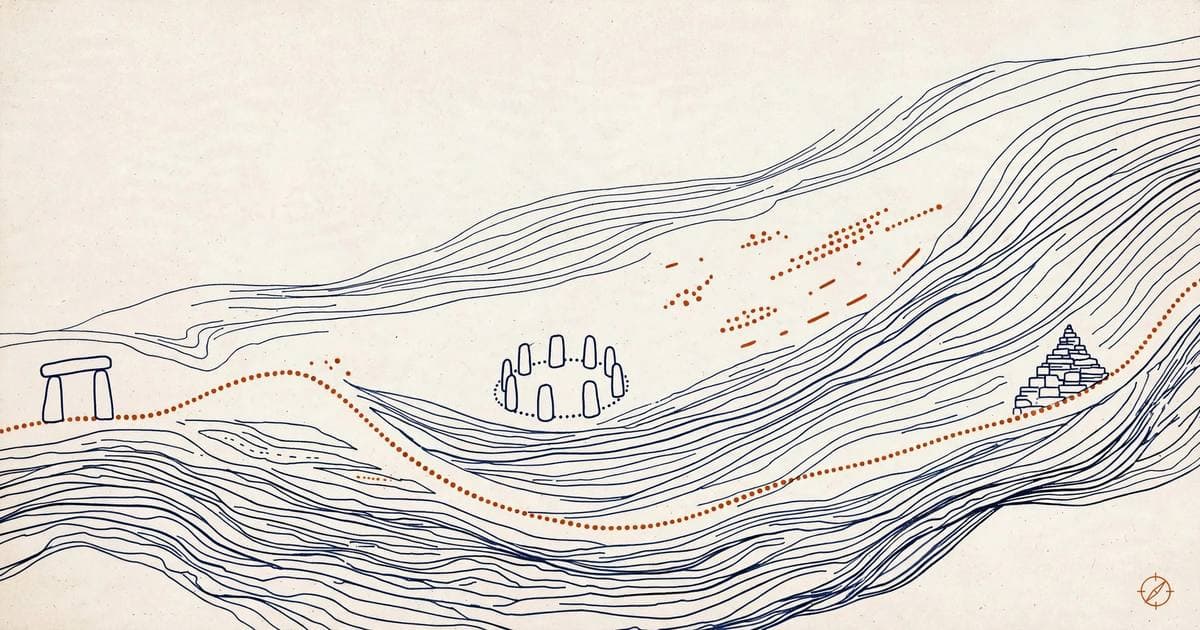
Long before history: the million years India spent in the Stone Age
Half a million years of Indian history happened before a single word was written. From Bhimbetka's painted caves to Mehrgarh's first farmers, this is the prehistory UPSC keeps testing.
Ancient History · 27 September 2026 · 28 min read